Analysis of my dad's work
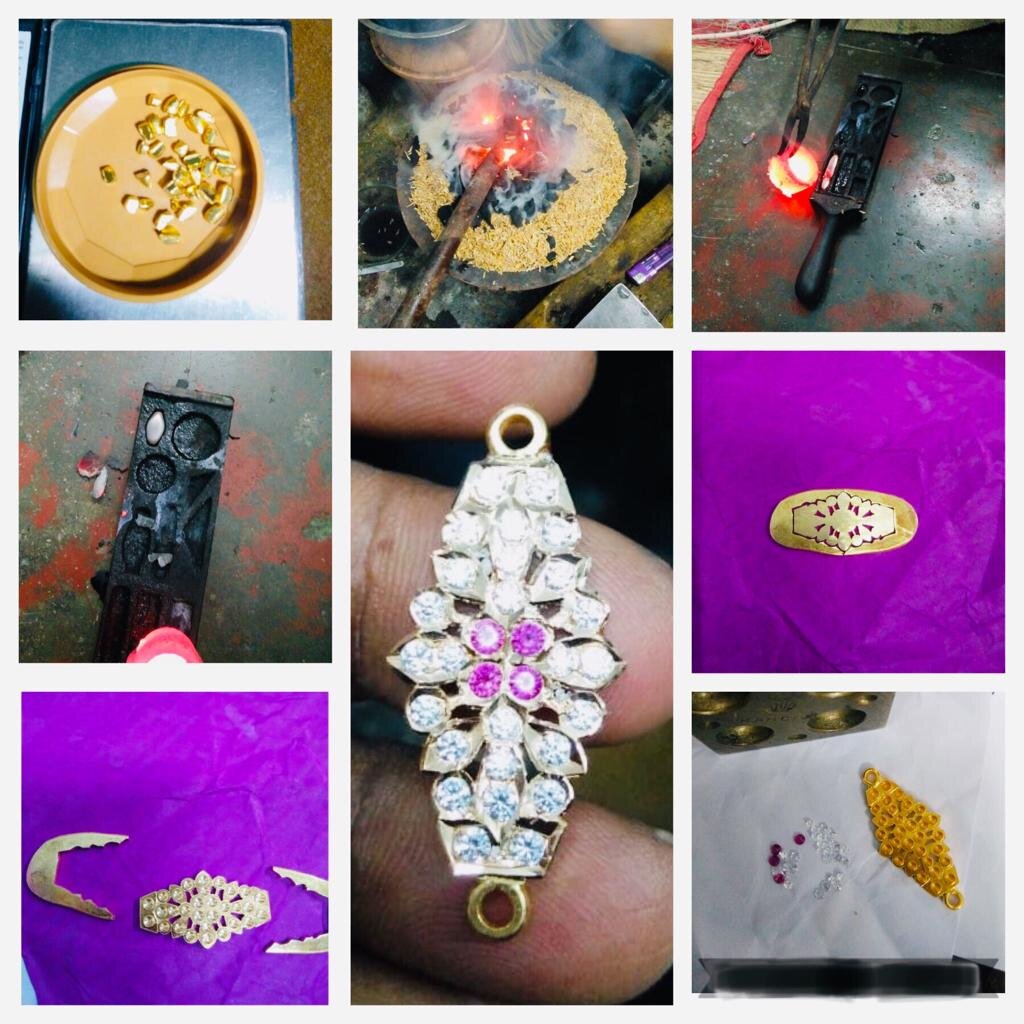
My dad makes gold ornaments, I remember getting ready on Sunday mornings as a kid to go with my dad to deliver customers orders. I’ve spent years after that detached from his business because of being busy at school. Finally, I am happy to be able to relate to his work as a software engineer.
This father’s day I’ve spent some time analyzing his business, hope you like reading it!
How it all started?
My dad was learning the skill from his uncle. There was good learning curve for a while, however, he didn’t see enough growth potential financially, so he decided to start on his own. When i asked him what gave him enough confidence that he will acquire customers, he said his focus was on delivering good results for a few customers intially so they become loyal and return. He also said that his low living costs made the move easier. He mentioned he had a friend who was already in business and was willing to outsource to trusted third parties which kept him busy during the initial stages.
He very passionately said that it’s a great feeling to see customers starting with small orders and then growing financially to make big orders.
Now, let’s jump into how the customer journey looks like.
Requirements gathering:
Requirements are usually around design, weight, durability and less service charges. Designs can be downloaded from the web or design catalogues or pictures of similar orders(in most cases).
work debt(in any form):
Since tech debt is a big thing, I asked him if they have similar problems, Apparently, value of hours spent is far less than material costs, so it is easier to get the original material(or metal in this case) back and re-do it.
Experimentation:
He said he personally tries to keep things simple and not experiment but it is common for people to experiment as cost of experimentation is pretty low.(material value can always be retrieved)
Designs:
There are jewellery designers that upload in the internet, but it is mostly one customer wanting to get something others have.(FOMO aka market standards :P)
What is work usually like:
He said it varies based on the order, I will try to summarize steps for above picture
- Gold biscuit is cut into pieces
- It is melted and turned to a sheet
- Then it’s cut into required shape and drilling is done for stones
- Stones are fit
- Then it’s polished
Testing:
He said testing happens at every stage for durability and it is important to catch issues in early phases of the product.
Peak seasons:
He said that marriage seasons and sravana masam are peak seasons and he usually works longer during those and shorter normally.
Competition:
He said these are the factors that help stand-out
- Customer engagement
- Faster delivery
- Quality and durability
Migrations:
He said almost 70% of the orders are migrations.(Changing one ornament to another) Apparently, they can’t escape migrations either.
Cost of failures:
Pretty low as material can be extracted and can be re-done. He said worst case scenario is that he doesn’t make any money on the order.
Future of work and views on automation:
He said that it has changed a lot since he started but he doesn’t see it going fully automatic.
What does he have to say about gold obsession?
He is obviously happy about it(Why wouldn’t he be? :P) and said he would rather be obsessed about something that has financial value.
He said it makes customers happy to have ornaments and that’s good enough metric.
Conclusion:
Hope you had fun reading it, pretty sure you can find someone you know that would love to talk about their work and you can make them see it in a way they haven’t before. Writing this made me learn things about my dad that I wouldn’t have known otherwise.
I also hope this article makes him realise his work is as challenging as an office job that he always thought he wanted to do.My mom also wants a mention but i will probably write a different one about her cooking :P